Gold, Diamond, Polki or Jadau — How Different Bridal Jewellery Is Valued
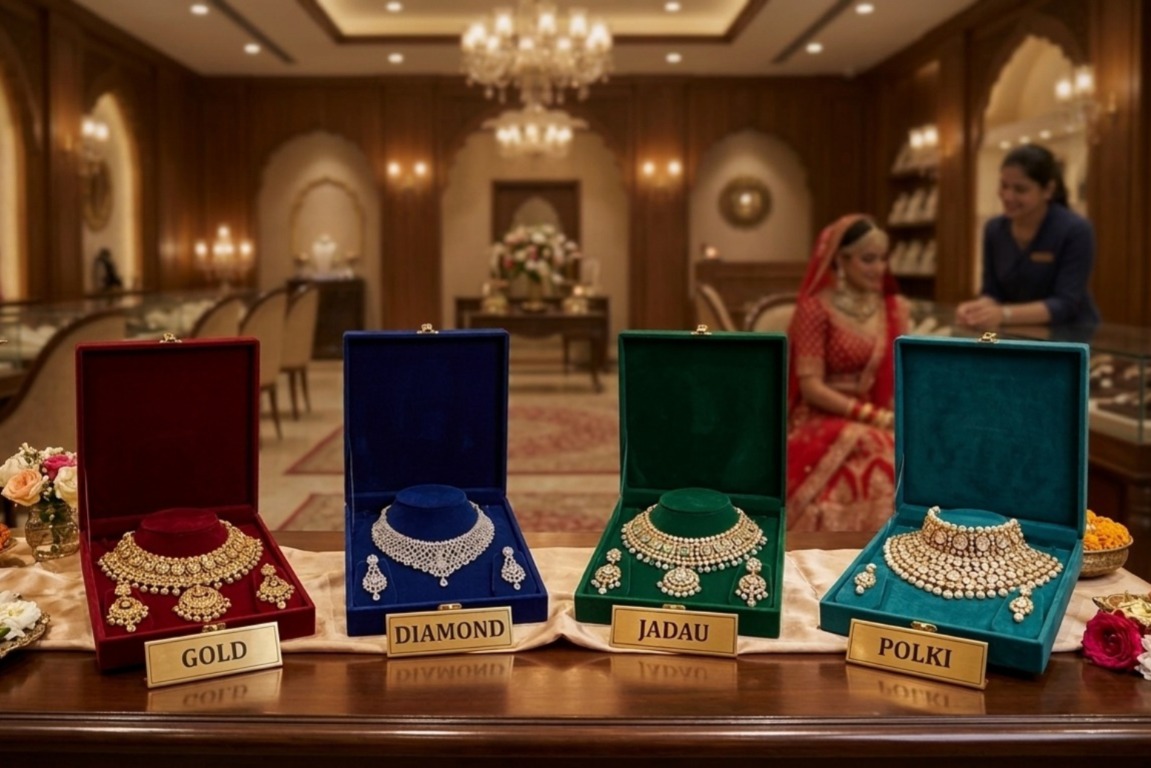
Bridal jewellery is one of the most emotional purchases a person will ever make. It’s worn on one of the most photographed days of your life, blessed by elders, admired by guests—and often preserved for generations.
But behind the sparkle lies a question many consumers quietly wonder about:
Why is one bridal necklace priced so differently from another—even when they look similar?
The answer lies in how jewellery is valued. Gold, diamond, polki, and jadau may all shine beautifully on a bride, but they follow very different rules when it comes to pricing, craftsmanship, resale potential, and long-term worth.
If you’re shopping for bridal jewellery—or building a trousseau that balances beauty with value—understanding these differences can help you make more confident and informed decisions.
Jewellery Value Is Not the Same as Jewellery Price
Before exploring the different types of bridal jewellery, it’s important to understand one key idea:
Price is what you pay today.
Value is what the jewellery holds over time.
That value can be financial, emotional, cultural, or artisanal.
Some jewellery holds value because of precious metal purity.
Some because of rare stones.
Others because of craftsmanship, heritage, or cultural significance.
Understanding what you’re paying for helps you decide what matters most to you—whether it’s investment value, heirloom potential, everyday wearability, or pure bridal grandeur.
Gold Jewellery: Valued by Weight, Purity and Market Rate
Gold jewellery is the most straightforward type of jewellery to understand—and that’s exactly why it has remained a cornerstone of bridal purchases for generations.
The value of gold jewellery is primarily determined by three factors:
- The weight of gold used
- The purity of the gold (karat)
- The prevailing market price of gold
Because gold is traded globally, its value remains transparent and widely recognised. When you buy a gold necklace, you are essentially buying a precious metal asset that retains measurable value over time.
Why Gold Holds Strong Value
Gold jewellery offers several advantages that make it financially reassuring:
- It is universally accepted and easily liquidated
- It can be resold or exchanged with relative ease
- Its value closely follows global gold market prices
- Pricing is generally clear and predictable
While making charges and design complexity may affect the purchase price, the core value remains tied to the gold itself.
What Consumers Should Know
When purchasing gold bridal jewellery, a few things are worth remembering:
- Making charges can vary widely depending on design complexity
- 22K gold is most common for bridal jewellery in India
- 24K gold retains the highest intrinsic metal value but is too soft for most jewellery
- The design may enhance emotional appeal but does not significantly increase resale value
For many families, gold bridal jewellery is not just adornment—it is also a form of long-term financial security.
Diamond Jewellery: Valued by the 4Cs and Craftsmanship
Diamond jewellery represents a different kind of value—one rooted more in luxury and aesthetics than in pure commodity pricing.
Diamonds are valued based on what the industry calls the 4Cs:
- Cut
- Colour
- Clarity
- Carat
Together, these factors determine the quality and rarity of a diamond.
However, the value of diamond jewellery also depends on several other elements:
- The precision of the stone setting
- The design and craftsmanship
- Certification from reputable gemological labs
- Brand reputation
This makes diamond jewellery valuation far more complex than gold.
A Reality Check About Diamond Resale Value
While diamonds are highly desirable, consumers should understand one important point:
Diamonds typically do not appreciate in value the way gold does.
When diamonds are resold, their value is often significantly lower than the original purchase price. This happens because a large portion of the retail price includes design costs, brand premiums, and retail margins.
That said, diamond jewellery continues to hold immense emotional and lifestyle value.
Why Brides Choose Diamonds
Despite lower resale value, diamonds remain popular for several reasons:
- They offer modern elegance
- They suit reception and cocktail looks
- They are perfect for engagement rings
- They can be worn frequently beyond the wedding
For many brides, diamonds represent luxury, sophistication, and contemporary style rather than financial investment.
Polki Jewellery: Valued for Natural Stones and Craftsmanship
Polki jewellery occupies a fascinating space between heritage and luxury. Unlike modern diamonds that are cut and polished to precise shapes, polki uses natural, uncut diamonds.
These stones retain their original form, giving polki jewellery a distinctive raw brilliance that has been admired for centuries.
Polki jewellery has deep historical roots in royal courts across India and continues to be one of the most sought-after choices for traditional bridal jewellery.
What Makes Polki Jewellery Valuable
Several elements influence the value of a polki piece:
- The size and quality of the uncut diamonds
- The purity of the gold base, typically 22K
- The intricate handcrafted setting
- The expertise of the artisan or brand
Because polki jewellery is largely handmade, each piece is unique. Slight variations in stone shape and setting give every design its own personality.
Resale and Long-Term Value
Polki jewellery generally holds value better than modern diamond jewellery, largely because it uses natural diamonds and high gold content.
However, its resale value can depend heavily on:
- Craftsmanship quality
- Condition of the piece
- Market demand for traditional jewellery
For many families, polki jewellery is not purchased purely for resale—it is chosen for its bridal grandeur and heirloom potential.
Jadau Jewellery: Valued as Wearable Heritage
Jadau jewellery represents one of the most intricate and historically rich jewellery traditions in India. The word “jadau” refers to a centuries-old technique in which stones are set without modern adhesives, using lac, gold foil, and highly skilled handwork.
Creating a single jadau piece can take weeks or even months, depending on complexity.
Because of this painstaking craftsmanship, jadau jewellery is often viewed less as a commodity and more as a work of art.
Why Jadau Jewellery Is So Special
Jadau pieces stand apart for several reasons:
- They are entirely handcrafted
- The process is extremely labour-intensive
- Each piece is often one-of-a-kind
- The designs carry deep cultural heritage
The craft itself has been passed down through generations of artisans, making jadau jewellery a living expression of India’s jewellery traditions.
Understanding Its Value
Unlike gold or diamonds, the value of jadau jewellery is not always easy to quantify.
Its worth depends heavily on:
- The skill of the artisans
- The complexity of the design
- The quality of stones and gold used
- The historical or cultural significance of the piece
While resale value can vary, the emotional and cultural value of jadau jewellery is often unmatched.
Many families purchase jadau pieces not with the intention of selling them—but of passing them down to future generations.
How Today’s Brides Are Building Balanced Bridal Collections
Modern bridal buyers are increasingly informed and intentional in their choices. Rather than selecting only one type of jewellery, many brides are building balanced collections that combine different kinds of value.
For example:
- Gold jewellery provides financial security and timeless tradition.
- Diamond jewellery offers modern elegance and versatility.
- Polki jewellery delivers dramatic bridal grandeur.
- Jadau jewellery carries cultural depth and heirloom appeal.
Together, these pieces allow brides to create a jewellery wardrobe that reflects both personal style and long-term significance.
Understanding Value Beyond the Price Tag
Bridal jewellery is far more than a purchase—it’s a reflection of personal history, family traditions, and life milestones.
When you understand how different types of jewellery are valued, you gain a clearer perspective on what you’re truly buying. It becomes easier to choose pieces that align not just with your wedding day vision, but also with your future lifestyle, emotional priorities, and legacy.
Because the best bridal jewellery doesn’t just look beautiful for a single celebration.
It continues to carry meaning, memories, and value long after the wedding is over.
Related articles

Where luxury finds meaning.