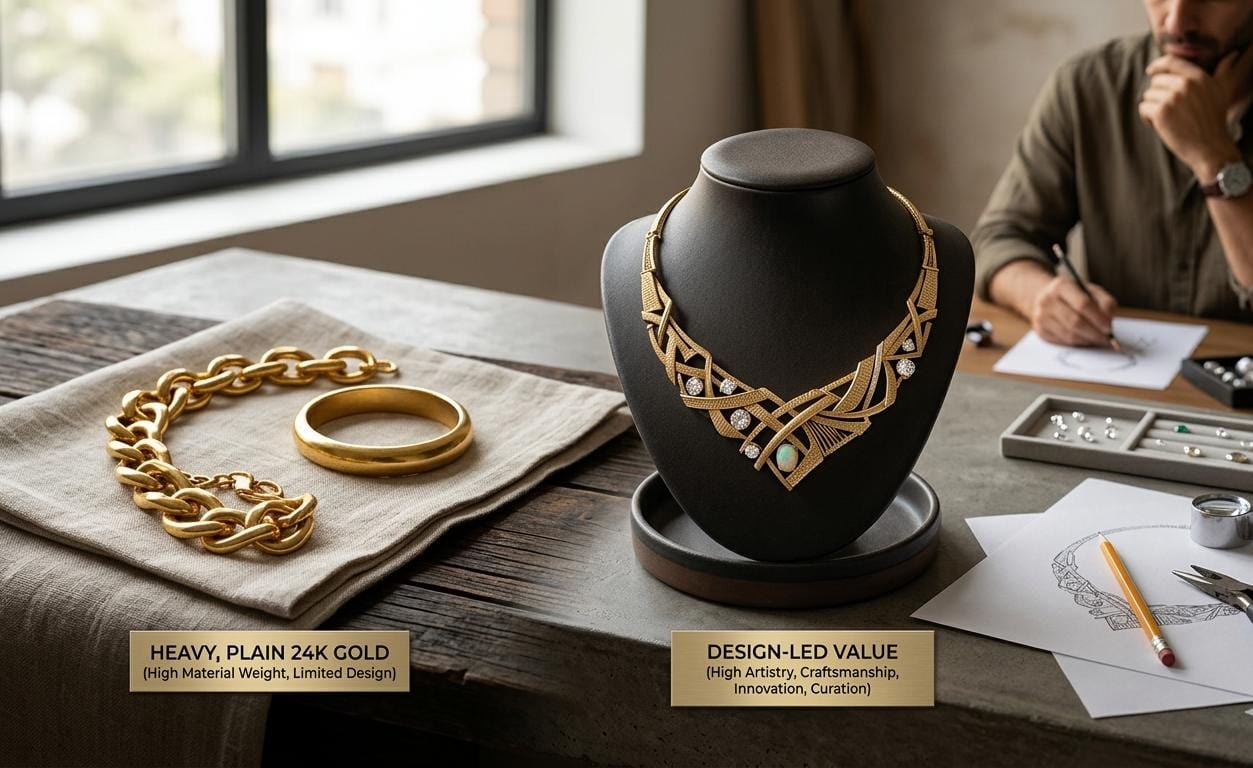
More Gold ≠ Better Jewellery: Understanding Design-Led Value
March 11, 2026
When buying jewellery, many consumers instinctively ask one question first:
“Kitne gram ka hai?”
For decades, jewellery purchases—especially in India—have been closely linked to gold weight. Families often believe that the heavier the jewellery, the better the purchase.
But modern jewellery buying is more complex than that.
Today, many consumers face confusion when they walk into a showroom and see two pieces that look similar but have very different prices, or a lightweight piece that costs more than a heavier one. This often leads to doubts like:
- Why is this piece expensive when it has less gold?
- Am I paying too much for design?
- Is lightweight jewellery a bad investment?
- How do I know if a piece is truly worth the price?
Understanding design-led value can help answer these questions and make jewellery buying far more confident and informed.
The Biggest Misconception: Jewellery Value = Gold Weight
Gold weight does matter—but it is only one part of the total value of jewellery.
The final price of a piece typically includes several components:
- Gold value (based on weight and purity)
- Gemstones, diamonds, or other materials
- Design and creative development
- Craftsmanship and labour
- Manufacturing complexity
- Brand expertise and finishing quality
This means that two pieces with the same gold weight can have completely different values depending on how they are designed and crafted.
Why Some Lightweight Jewellery Costs More
One of the most common doubts consumers have is:
“Why is this lighter necklace more expensive than the heavier one?”
The answer usually lies in design complexity and craftsmanship.
A lightweight but intricate piece may involve:
- highly detailed design work
- precision gemstone setting
- hand-finishing techniques
- multiple stages of production
- hours of skilled craftsmanship
Creating such pieces requires experienced artisans and specialised techniques, which add value beyond the metal itself.
In many cases, what you are paying for is human skill and artistic creation.
The Hidden Work Behind Beautiful Jewellery
Many consumers only see the final piece—but jewellery creation involves a long process.
A design-led piece may go through several stages:
- Concept and design development
Designers sketch and refine ideas before production even begins. - Digital modelling and structure planning
Modern jewellery often uses advanced tools to ensure the piece is strong, balanced, and comfortable. - Crafting and assembly
Skilled artisans shape the metal, create patterns, and prepare the structure. - Stone setting and detailing
Diamonds and gemstones must be set precisely to ensure both beauty and durability. - Finishing and polishing
Multiple rounds of polishing and quality checks ensure the piece looks flawless.
Each step contributes to the final quality and value of the jewellery.
Why Extremely Heavy Jewellery Isn’t Always Practical
Another common consumer concern is whether buying lighter jewellery means compromising on value.
In reality, extremely heavy jewellery can sometimes create its own problems.
Heavy pieces may:
- feel uncomfortable during long events
- be difficult to style with modern clothing
- remain unused in lockers most of the year
- cause strain on the neck or ears
This is why many modern jewellery designers focus on smart engineering and thoughtful design—creating pieces that look grand but remain comfortable to wear.
The goal is to balance beauty, durability, and wearability.
What “Design-Led Jewellery” Actually Means
Design-led jewellery is not simply jewellery that “looks different.”
It refers to pieces where design thinking plays a central role in creating value.
This includes:
- thoughtful proportions
- innovative structures
- artistic motifs and storytelling
- refined finishing
- careful integration of gemstones or textures
Instead of focusing only on gold weight, these pieces focus on how the jewellery is imagined, crafted, and experienced when worn.
How Consumers Can Evaluate Jewellery Better
If gold weight alone is not the full measure of value, what should consumers look for?
Here are a few practical ways to evaluate jewellery more confidently.
1. Look at Craftsmanship
Examine the details closely.
Are the edges smooth?
Are stones neatly set?
Is the finishing clean and refined?
High-quality craftsmanship is usually visible in the smallest details.
2. Ask About the Design
Good jewellers are happy to explain:
- the inspiration behind the design
- how the piece was made
- what makes the design unique
Understanding the story behind the piece often reveals its true value.
3. Check Comfort and Balance
Try wearing the jewellery.
A well-designed piece should:
- sit comfortably
- feel balanced
- move naturally with your body
Comfort is often a sign of good design engineering.
4. Consider How Often You Will Wear It
A lighter, versatile piece that you wear many times may offer more real value than a heavy piece worn once a year.
Jewellery should bring joy through use, not just storage.
5. Buy from Trusted Jewellers
Reputable jewellers invest in:
- skilled craftsmen
- quality materials
- reliable manufacturing processes
- proper certifications and transparency
Trust and expertise often play a major role in the value of jewellery.
Jewellery Is Both Emotion and Craft
Jewellery has always held emotional significance. It marks weddings, milestones, celebrations, and family traditions.
But behind every beautiful piece lies a combination of precious materials, creative vision, and skilled craftsmanship.
Gold weight will always matter—but it is not the only measure of worth anymore.
When consumers understand the role of design, craftsmanship, and artistry, jewellery buying becomes far less confusing—and far more rewarding.
Because the best jewellery is not always the heaviest.
Sometimes, the most valuable pieces are the ones where creativity, skill, and beauty come together perfectly.
Related articles

Where luxury finds meaning.