Resale Reality: What Holds Value in Bridal Jewellery — And What Doesn’t?
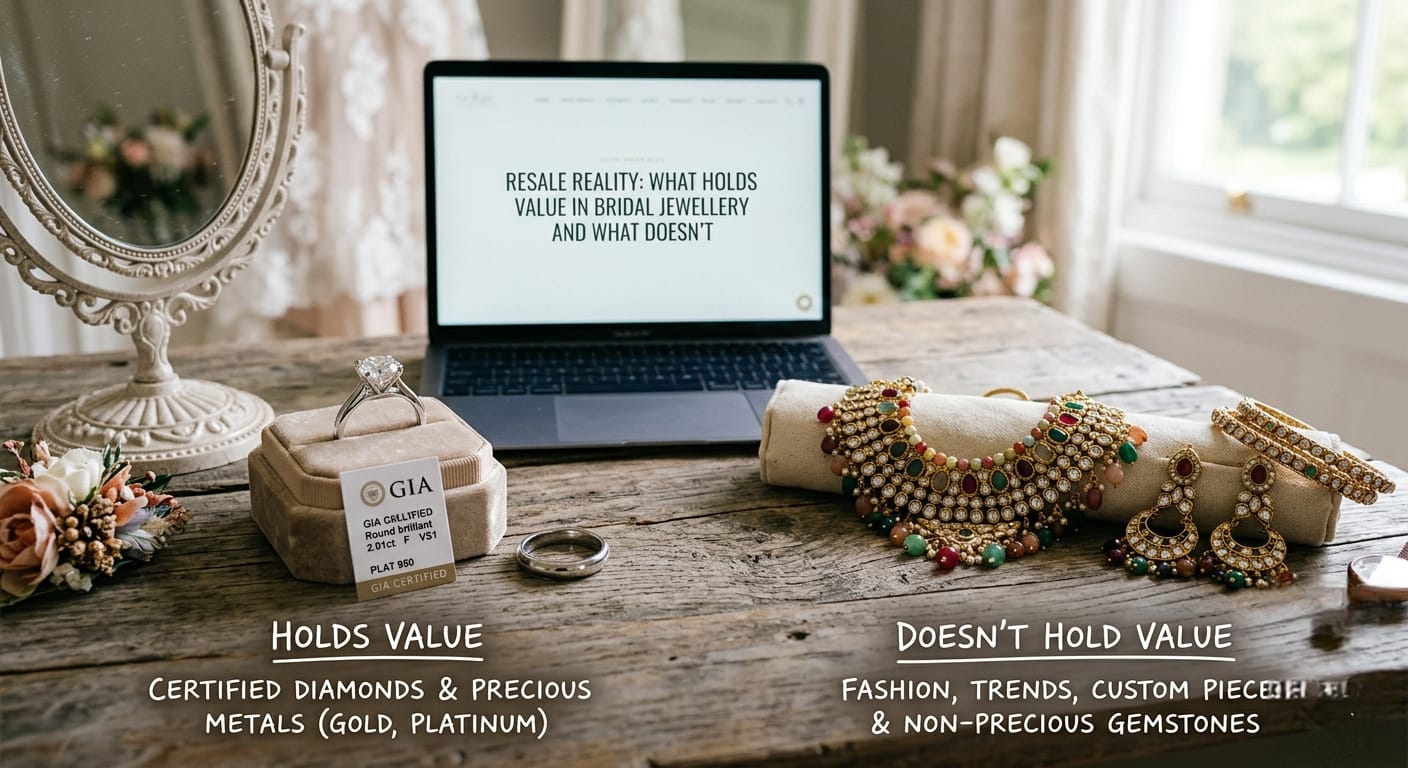
For many families, bridal jewellery is not only a symbol of celebration and tradition—it is also viewed as a long-term asset.
During wedding shopping, a common question often arises:
“If we ever need to sell or exchange this jewellery in the future, how much value will it retain?”
While jewellery is primarily purchased for emotional and cultural reasons, understanding the resale reality can help buyers make more informed decisions.
The truth is that not every element of bridal jewellery contributes equally to its resale value.
Let’s explore what actually holds value—and what typically does not.
Gold: The Strongest Value Anchor
In most bridal jewellery, gold remains the primary component that retains resale value.
When jewellery is sold or exchanged, jewellers typically calculate the value based on:
- Current gold rate
- Net gold weight
- Purity of the metal (such as 22K or 18K)
Gold has long been considered a reliable store of value because it is globally traded and consistently liquid.
This is why traditional bridal jewellery often prioritizes gold as the core material.
However, it is important to remember that resale calculations usually consider only the metal value, not the original purchase price.
Diamonds: Value Depends on Quality
Diamonds can add beauty and prestige to bridal jewellery, but their resale value depends heavily on quality and market demand.
Factors that influence diamond resale value include:
- Cut quality
- Clarity
- Colour grade
- Certification
- Overall size (carat weight)
High-quality diamonds with recognized certification tend to hold value better than smaller, lower-grade stones.
However, unlike gold, diamonds are not priced by a universal daily market rate, which makes resale pricing more variable.
Craftsmanship and Making Charges
One of the biggest surprises for many buyers is that making charges are rarely recovered during resale.
When jewellery is purchased, a portion of the price reflects:
- Design development
- Artisan labour
- Manufacturing processes
- Finishing and polishing
These elements contribute to the beauty and uniqueness of the jewellery—but they usually do not translate into resale value.
In most cases, resale calculations focus on the material value, not the craftsmanship.
Designer and Brand Premiums
Some jewellery pieces carry a higher price because of their association with a well-known designer or brand.
While brand reputation can influence the original purchase price, it does not always guarantee a higher resale value.
Unless the piece is from a highly collectible designer line or contains rare gemstones, resale value is still largely determined by metal and stone content.
Gemstones: Beauty vs Liquidity
Coloured gemstones—such as rubies, emeralds, and sapphires—can add extraordinary beauty to bridal jewellery.
However, their resale value varies significantly depending on factors like:
- Origin of the stone
- Natural vs treated status
- Colour intensity
- Transparency and clarity
High-quality natural gemstones with certification may retain strong value, but many commercial-grade stones have limited resale liquidity.
For most buyers, gemstones are best appreciated for their aesthetic and symbolic value rather than resale potential.
Jewellery Design and Practicality
Certain design choices can also influence resale outcomes.
For example:
- Very intricate designs may involve higher melting loss if jewellery is sold for gold value
- Pieces with heavy gemstone settings may have lower recoverable metal weight
- Lightweight designs may have lower resale purely due to less metal content
This does not mean such designs are poor purchases—it simply means their value lies more in wearability and design appeal.
The Emotional Value of Bridal Jewellery
While resale value is a practical consideration, bridal jewellery often carries far deeper significance.
Many pieces become:
- Family heirlooms
- Symbols of cultural heritage
- Gifts passed through generations
In such cases, the emotional value of the jewellery often far exceeds its material worth.
This is why many families view bridal jewellery not just as an asset—but as a lasting memory of an important life moment.
A Balanced Approach to Bridal Jewellery
For buyers who wish to balance beauty and long-term value, a thoughtful approach may include:
- Investing in high-purity gold pieces
- Selecting well-crafted but versatile designs
- Choosing certified diamonds when possible
- Viewing making charges as part of the artistic value
This mindset allows jewellery buyers to enjoy the emotional, cultural, and aesthetic rewards of their purchase while still understanding its practical value.
Bridal jewellery is more than an investment.
But knowing what truly holds value can make the buying journey more confident and informed.
Related articles

Where luxury finds meaning.