Why Two Jewellery Pieces with the Same Weight Can Cost Very Different Amounts
March 9, 2026
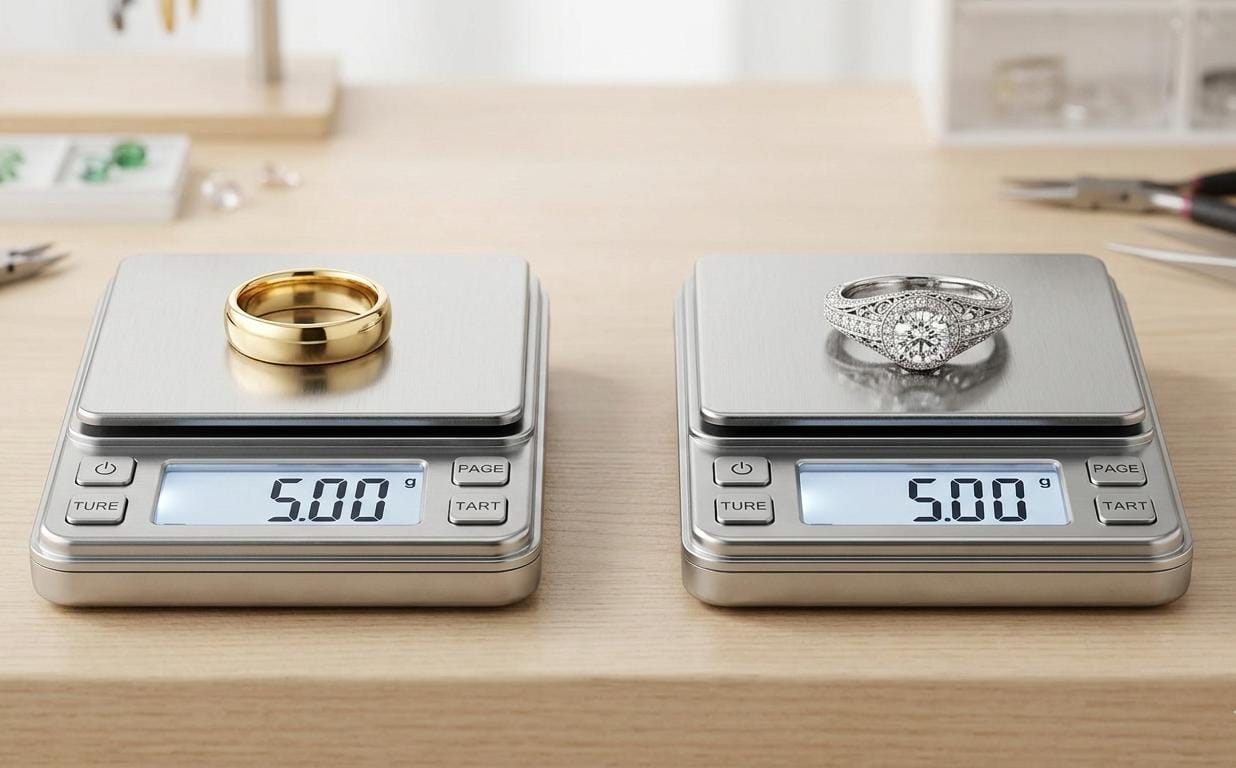
Walk into a jewellery store and you may notice something puzzling.
Two rings may weigh exactly the same, two necklaces may have identical gram weight, and yet the price difference between them can be significant. One piece may cost ₹45,000 while the other could be ₹75,000 or more.
For many jewellery buyers, this raises a common question:
“If the gold weight is the same, why is the price different?”
The answer lies in a combination of craftsmanship, design complexity, gemstone quality, and several invisible factors that transform raw metal into a piece of jewellery. Understanding these elements can help consumers appreciate what they are truly paying for.
Let’s break down the real reasons behind the price difference.
1. Craftsmanship: The Human Skill Behind the Jewellery
Jewellery is not just metal—it is art shaped by skilled hands.
A simple gold band may require minimal labour, while a detailed necklace with intricate patterns can take many hours or even days of craftsmanship.
Techniques such as:
- Filigree work
- Hand engraving
- Meenakari
- Stone setting
- Antique finishing
require highly trained artisans. The more intricate the work, the higher the making charges.
In many cases, the craftsmanship alone can account for a significant portion of the price difference between two pieces with the same weight.
2. Design Complexity: Innovation Has Value
Modern jewellery is heavily design-driven. A designer piece often involves:
- CAD design development
- Multiple prototypes
- Detailed finishing work
- Structural engineering for durability
A minimal chain and a sculptural designer pendant may both weigh 10 grams, but the creative effort behind them is vastly different.
Consumers are not only paying for metal—they are paying for design innovation and originality.
3. Gemstones Can Change Everything
When gemstones enter the equation, weight becomes only one part of the price.
Two pieces with identical gold weight may differ dramatically because of:
- Diamond quality (cut, clarity, colour, carat)
- Natural vs lab-grown diamonds
- Type of gemstone used (emerald, ruby, sapphire, etc.)
- Precision of stone setting
Even small diamonds can add significant value depending on their quality and sourcing.
A ring with high-quality natural diamonds will naturally cost more than a ring with smaller or lower-grade stones, even if the gold weight is identical.
4. Making Charges: The Hidden Price Component
Most consumers focus on gold rate × weight, but jewellery pricing includes another key component: making charges.
Making charges cover:
- Artisan labour
- Design development
- Production processes
- Polishing and finishing
Simple pieces may have lower making charges, while intricate jewellery can have much higher ones.
This is one of the most common reasons two pieces with the same gold weight have different final prices.
5. Finishing and Detailing
High-end jewellery often goes through multiple finishing processes such as:
- Mirror polishing
- Matte or brushed textures
- Antique treatments
- Rhodium plating
These processes enhance durability and aesthetics but also increase production cost.
The result is jewellery that not only looks better but retains its beauty longer.
6. Brand Value and Design Identity
Just like fashion, jewellery brands invest heavily in:
- Original design development
- Quality control
- Craftsmanship standards
- Customer experience
When you purchase jewellery from a reputed brand or designer label, part of the price reflects trust, design reputation, and quality assurance.
It is similar to buying clothing—two garments may use the same amount of fabric, but a designer label will still command a higher price.
7. Structural Engineering and Wearability
A well-designed piece of jewellery is not just beautiful—it must also be comfortable, durable, and secure.
Designers often incorporate hidden elements such as:
- Reinforced structures
- Secure gemstone settings
- Balanced weight distribution
These engineering aspects improve wearability and longevity but require additional design work and craftsmanship.
8. Exclusivity and Limited Designs
Some jewellery pieces are produced in very limited quantities or even as single creations.
Exclusive designs often involve:
- Custom craftsmanship
- Limited production runs
- Unique artistic elements
This exclusivity can increase the value of the piece beyond just its material weight.
The Key Takeaway for Jewellery Buyers
When buying jewellery, it helps to look beyond the gram weight.
A piece of jewellery represents a blend of:
- Precious metal
- Skilled craftsmanship
- Artistic design
- Gemstone quality
- Finishing and engineering
Two pieces may weigh the same, but their creative journey and craftsmanship can be entirely different.
Understanding this not only makes you a smarter buyer—it also helps you appreciate the artistry behind every piece of jewellery.
Related articles

Where luxury finds meaning.